

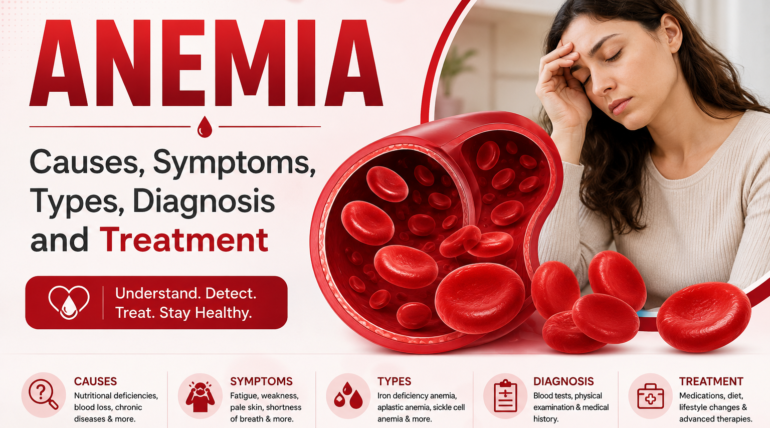
Anemia is a common medical condition that occurs when the body does not have enough healthy red blood cells or hemoglobin to carry adequate oxygen to the body’s tissues. It can affect people of all ages and may develop gradually or occur suddenly, depending on its underlying cause. Understanding the causes, symptoms, and available treatment options can help with timely medical care.
What Is Anemia?
Hemoglobin is a protein found in red blood cells that carries oxygen from the lungs to different parts of the body. When hemoglobin levels are lower than normal, the body may not receive sufficient oxygen. This can result in tiredness, weakness, and reduced physical performance.
Anemia can be temporary or long-term and may range from mild to severe. In many cases, it is a sign of another underlying health problem that requires medical evaluation.
Common Causes of Anemia
Several factors can contribute to anemia. Common causes include:
- Iron deficiency
- Vitamin B12 or folate deficiency
- Blood loss
- Chronic diseases
- Kidney disorders
- Certain infections
- Genetic conditions
- Problems affecting red blood cell production
- Increased nutritional requirements during pregnancy
Iron deficiency is one of the most common causes, particularly when the body’s dietary iron intake is insufficient or there is ongoing blood loss.
Symptoms of Anemia
The symptoms of anemia can vary depending on its severity and how quickly it develops. Common symptoms include:
- Persistent tiredness and weakness
- Pale skin
- Dizziness or light-headedness
- Headaches
- Shortness of breath
- Rapid or irregular heartbeat
- Cold hands and feet
- Difficulty concentrating
Some people with mild anemia may have few noticeable symptoms, which is why blood testing can be important when anemia is suspected.
Types of Anemia
There are several types of anemia, including iron-deficiency anemia, vitamin-deficiency anemia, anemia associated with chronic diseases, hemolytic anemia, and inherited forms such as sickle cell disease and thalassemia. Each type has different causes and may require a different treatment approach.
Diagnosis of Anemia
Doctors generally diagnose anemia through a medical evaluation and blood tests. A complete blood count (CBC) can help assess hemoglobin levels and red blood cell characteristics. Additional tests may be recommended to identify the underlying cause, such as iron, vitamin, kidney-function, or other investigations.
Treatment of Anemia
Treatment depends on the type and underlying cause of anemia. Depending on the diagnosis, treatment may include dietary improvements, iron or vitamin supplementation, medicines, treatment of an underlying disease, or management of blood loss. Severe cases may require more intensive medical treatment.
It is important not to take iron or other supplements without medical advice, because the appropriate treatment depends on the specific cause of anemia.
When to Seek Medical Attention
Persistent fatigue, unexplained weakness, dizziness, breathlessness, or other symptoms should not be ignored. Medical evaluation can help determine whether anemia is present and identify its underlying cause.
Early diagnosis and appropriate treatment can help manage anemia effectively and support better overall health.


Moving the goalposts sorry i was triple muted, so what do you feel you would bring to the table if you were hired for this position. A better understanding
Neque porro est qui dolorem ipsum quia quaed inventor veritatis et quasi architecto beatae vitae dicta sunt explicabo. Aelltes port lacus quis enim var